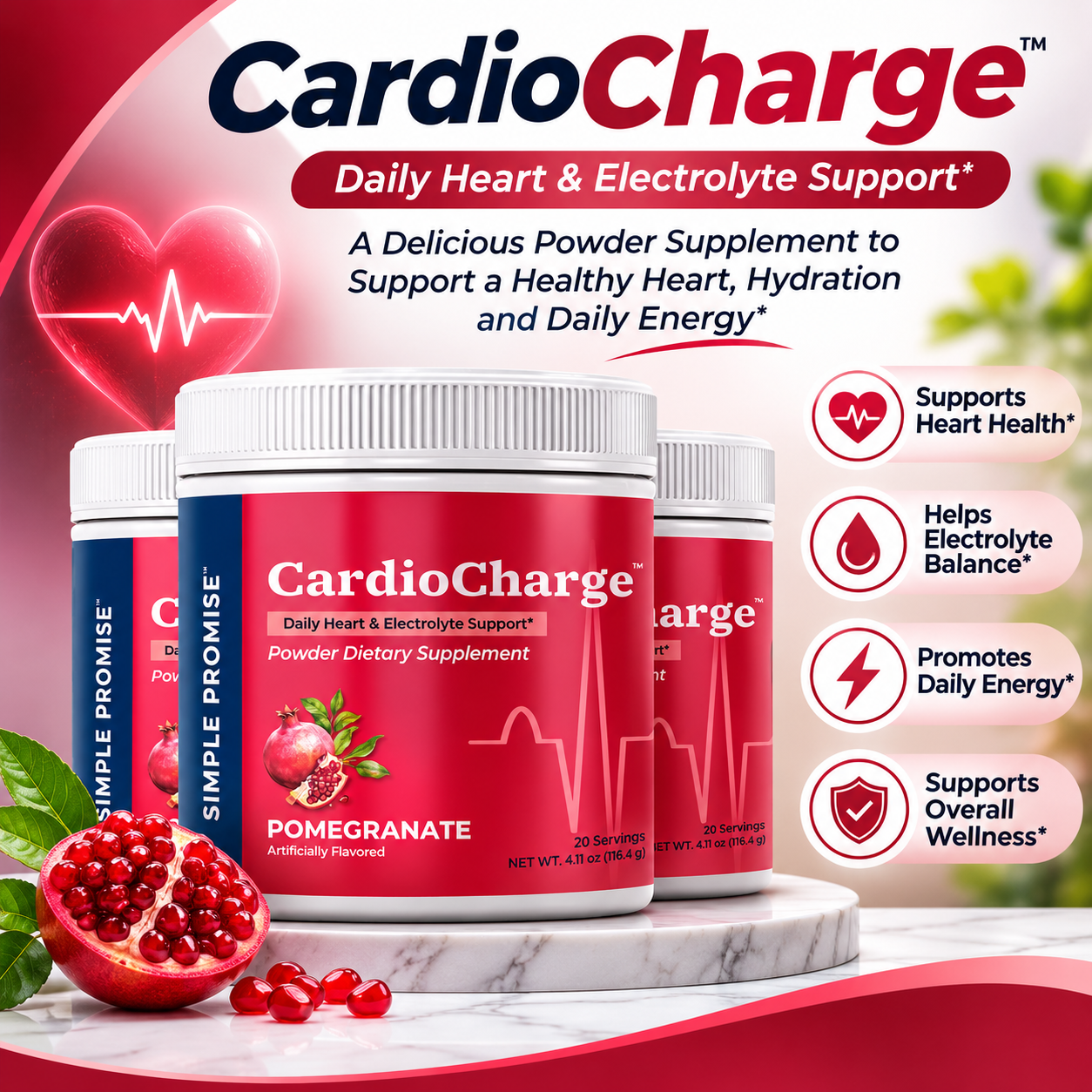
Heart health is shaped by what you eat, how you move, how well you sleep and what your doctor monitors. A supplement is a small piece of that picture. This article looks at where CardioCharge fits inside a heart-conscious day, and it is just as direct about where it does not.
What "Heart Support" Means for a Supplement
When a supplement label talks about heart wellness, it is describing nutrition that the heart and circulatory system use, not a treatment for any condition. CardioCharge is listed as a dietary supplement, which means it supports normal function through nutrients and is not intended to diagnose, treat, cure or prevent disease. The disclaimer page repeats that boundary in full.
That framing is helpful. It keeps expectations sensible. A nutrition product can be a reasonable part of a routine, yet it cannot replace prescribed medication, blood pressure monitoring or the advice of your clinician.
The Minerals Behind the Heart Angle
Three of the seven ingredients are electrolyte minerals. Potassium, at 380 mg per serving, takes part in fluid balance and in the electrical signals that cardiac and skeletal muscle rely on. Magnesium, at 190 mg, supports muscle and nerve function and the enzymes involved in energy metabolism. Sodium, at 140 mg, helps regulate fluid balance and works alongside potassium across cell membranes.
Many adults fall short on potassium and magnesium through food alone, mostly because produce, legumes, nuts and whole grains are not on the plate every day. A drink that supplies measured amounts is one convenient way to narrow that gap. You can read each mineral in detail on the CardioCharge ingredients page.
A word of caution on minerals
Minerals are not harmless in unlimited amounts. People with kidney conditions, those who have been told to limit potassium or sodium, and anyone who takes medication that affects electrolytes should talk with a professional before using any electrolyte product.
Plant Extracts and the Cardiovascular Conversation
Hibiscus flower extract (470 mg) and Hytolive® olive extract (30 mg) supply polyphenols, the colorful plant compounds that show up regularly in heart-nutrition research. Hibiscus, in particular, has been studied alongside blood pressure readings in some trials.
Those studies used specific preparations, doses and groups of people. They are background reading, not proof that this finished powder will move any number on your health report. The honest summary is that hibiscus and olive extracts are plant-based nutritional ingredients with an interesting research history. If you take blood pressure medication, ask your clinician before adding a hibiscus product.
Energy Matters for a Working Heart
The heart is a muscle that never clocks out, so energy supply is part of heart nutrition. D-Ribose (3,000 mg) is a building block of ATP, and magnesium helps the enzymes that handle energy metabolism. Our article on how the formula supports daily energy explains the pathway step by step.
Again, this is nutritional support. It does not mean the powder will make a tired person energetic, and it is no stand-in for investigating persistent fatigue with a doctor.
Habits That Matter More Than Any Powder
If heart health is your goal, these habits do far more than any single product:
- Eating plenty of vegetables, fruit, legumes, whole grains and healthy fats.
- Moving your body most days, in whatever form you will actually keep doing.
- Sleeping enough and managing stress.
- Keeping up with checkups, blood pressure readings and lab work.
- Taking prescribed medications exactly as directed.
CardioCharge sits on top of those basics. Think of it as a small, tasty daily habit that makes a few nutrients easy to remember.
Where CardioCharge May Fit Best
The product tends to suit adults who like the idea of an electrolyte drink without sugar or caffeine, who enjoy a pomegranate flavor, and who want a label that lists every amount. It is less suited to anyone who needs a medical-grade intervention. In that case the right step is a conversation with a clinician, not a supplement shelf.
Customer comments about the product, summarized on our reviews page, mostly talk about convenience and flavor. Those themes are about the routine, not about measured medical outcomes, and they are worth keeping in perspective.
Price, Packages and the Guarantee
One tub costs $49 and holds 20 servings. Three tubs cost $129 ($43 each), and six tubs cost $198 ($33 each). Every package ships free and carries a 365-day money-back guarantee, which gives you a long window to decide whether it suits your routine. The price and bonus article walks through the numbers, and the official overview shows the packages side by side.
The Bottom Line
CardioCharge offers electrolyte minerals, an energy nutrient, two plant extracts and an amino acid in a sugar-free, caffeine-free powder. That is a sensible nutritional profile for a heart-conscious routine, and nothing more dramatic than that. If the profile appeals to you, compare it with the full ingredients list article and the label itself, then decide with your clinician if you have any health conditions.
CardioCharge essentials: CardioCharge home page official overview reviews ingredient breakdown